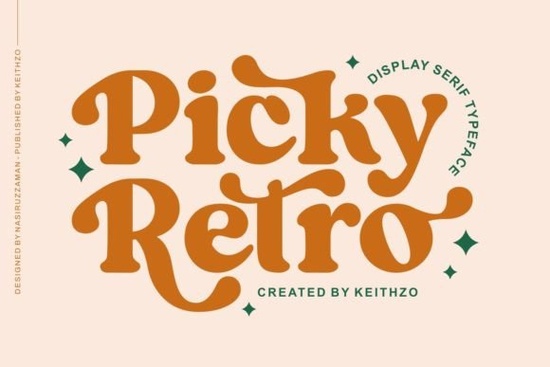
If you're looking for a bold, vintage-inspired display font that works well for logos, greeting cards, or social media graphics without feeling overused or overly kitschy you’ll likely enjoy Picky Retro Font. It’s a serif typeface with strong letterforms and subtle quirks: slightly uneven stroke weights, gentle flares on terminals, and a confident rhythm that reads as both classic and approachable. It’s not a strict historical revival, but rather a friendly reinterpretation of mid-century American signage and magazine headlines think diner menus, old postcards, or hand-set packaging from the 1950s.
When does Picky Retro Font work best?
This font shines in contexts where you want personality and clarity. Because it’s a display font not designed for long paragraphs it’s ideal for short, high-impact text: shop names on Etsy banners, wedding invitation headers, t-shirt slogans, or Instagram story text overlays. Its sturdy serifs and open counters hold up well even at smaller sizes (down to ~36pt for print, ~48px for web), especially when used with generous spacing.
It pairs naturally with clean sans-serifs like Montserrat or Inter for body text, or with other retro-leaning fonts if you’re building a cohesive mood board. For example, you might use The Pickles House Font for playful subheadings, or lean into contrast with Modern Vintage Font for a layered, textured look.
Who uses it and why?
Small business owners often reach for Picky Retro Font when refreshing their brand identity without going full “antique shop.” A local bakery, florist, or handmade soap maker might use it for their logo or seasonal promo banners it feels warm and human, not corporate or cold. Print-on-demand sellers find it especially useful for designs that need instant recognition: think mugs, tote bags, or wall art where typography is the main visual element.
Crafters appreciate how easily it cuts on Cricut or Silhouette machines the letters are well-spaced and avoid thin, fragile details that snag or break during weeding. And because it includes uppercase, lowercase, numerals, and basic punctuation (no stylistic alternates or ligatures to overcomplicate things), it’s straightforward to use in Canva, Adobe Express, or even basic word processors.
How does it compare to similar fonts?
Unlike some retro fonts that rely heavily on distressed textures or exaggerated swashes, Picky Retro Font keeps things clean and functional. It doesn’t try to mimic letterpress ink spread or film grain so it scales cleanly across digital and physical formats. If you’ve tried Awesome Everybody Font and found it too bubbly, or Have a Nice Day Honey Font too script-heavy, this one offers a middle ground: structured but spirited.
For designers who like subtle storytelling through type, it shares DNA with Remember Things Font both evoke memory and warmth but Picky Retro feels more grounded, less whimsical. You can see its design lineage clearly in real-world references like Picky Retro font, which draws from mid-century American advertising typography without copying it directly.
Practical tips before you download
- Test it at scale: Try it in your actual project file not just the preview image. Rendering varies across software (especially in older versions of Cricut Design Space).
- Check licensing: Creative Fabrica’s standard license covers personal and commercial use, including POD, but excludes resale of the font file itself or use in logo templates sold on marketplaces.
- Pair wisely: Avoid stacking it with other high-contrast serifs. Let it breathe next to neutral sans-serifs or light handwritten styles.
- Adjust tracking: The default spacing works well for headlines, but tighten it slightly (+5–10 units) for tighter logos or widen it (+20–30) for decorative banners.
If you’re already working with retro or vintage-themed projects or just want a dependable, expressive serif that doesn’t require tutorials to use Picky Retro Font is worth adding to your toolkit. It won’t solve every design challenge, but it handles its niche consistently: clear, characterful, and quietly confident.
Next step: Open your current project, swap in Picky Retro Font for one headline or logo lockup, and compare how it changes the tone even without changing color or layout. That small test often tells you more than any description.
Explore Design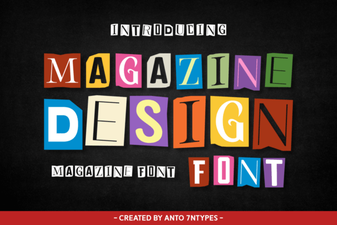 Choosing & Pairing Fonts for Magazine Layouts
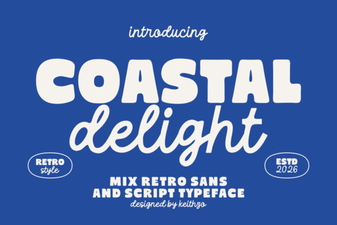 The Coastal Delight Font for Creative Beachside Designs
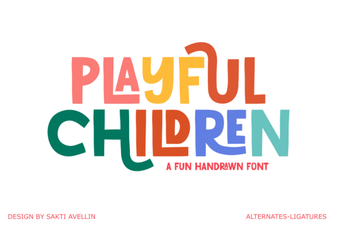 Creative and Playful Fonts for Kids' Designs
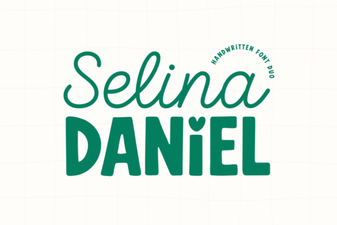 Selina Daniel Duo Font for Creative Design Projects
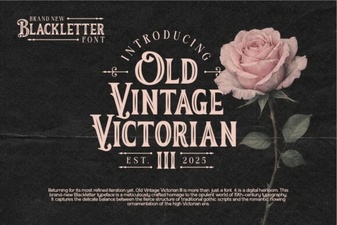 Victorian Iii Font for Classic Design Projects
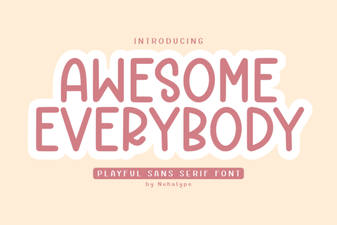 Unlock Creativity with the Awesome Everybody Font